
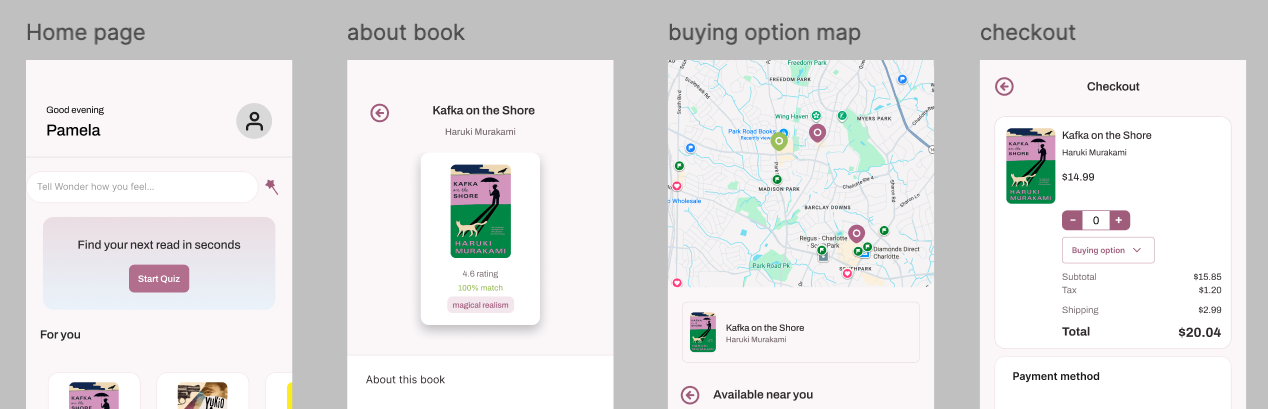
Wonder is a conceptual book discovery and marketplace app designed to create a more emotional and personalized reading experience. The project explores how readers discover books based on moods, aesthetics, and emotional themes rather than traditional genres. It also addresses the frustration many users experience with overwhelming recommendation systems and the difficulty of finding affordable physical books.
Research & Problem Definition
To better understand the current reading app landscape, I conducted competitor analysis and user research focused on modern reading behaviors, discovery habits, and purchasing patterns among Gen Z and Millennial readers.
I analyzed platforms such as Goodreads, StoryGraph, PangoBooks, Literal, and Fable to identify gaps in the market. While many apps offered strong community features or mood-based recommendations, users often experienced overwhelming interfaces, generic recommendation systems, and disconnected marketplace experiences.
Research revealed several key behavioral trends:
1. Readers increasingly prefer physical books and view them as extensions of personal identity.
2. “Vibe-based” discovery centered around emotional themes, aesthetics, and tropes has become more important than traditional genres.
3. Users are highly price-conscious and frequently search for deals, used books, and local bookstore options.
4. Many readers want personalized experiences that feel emotionally relevant without becoming visually overwhelming.
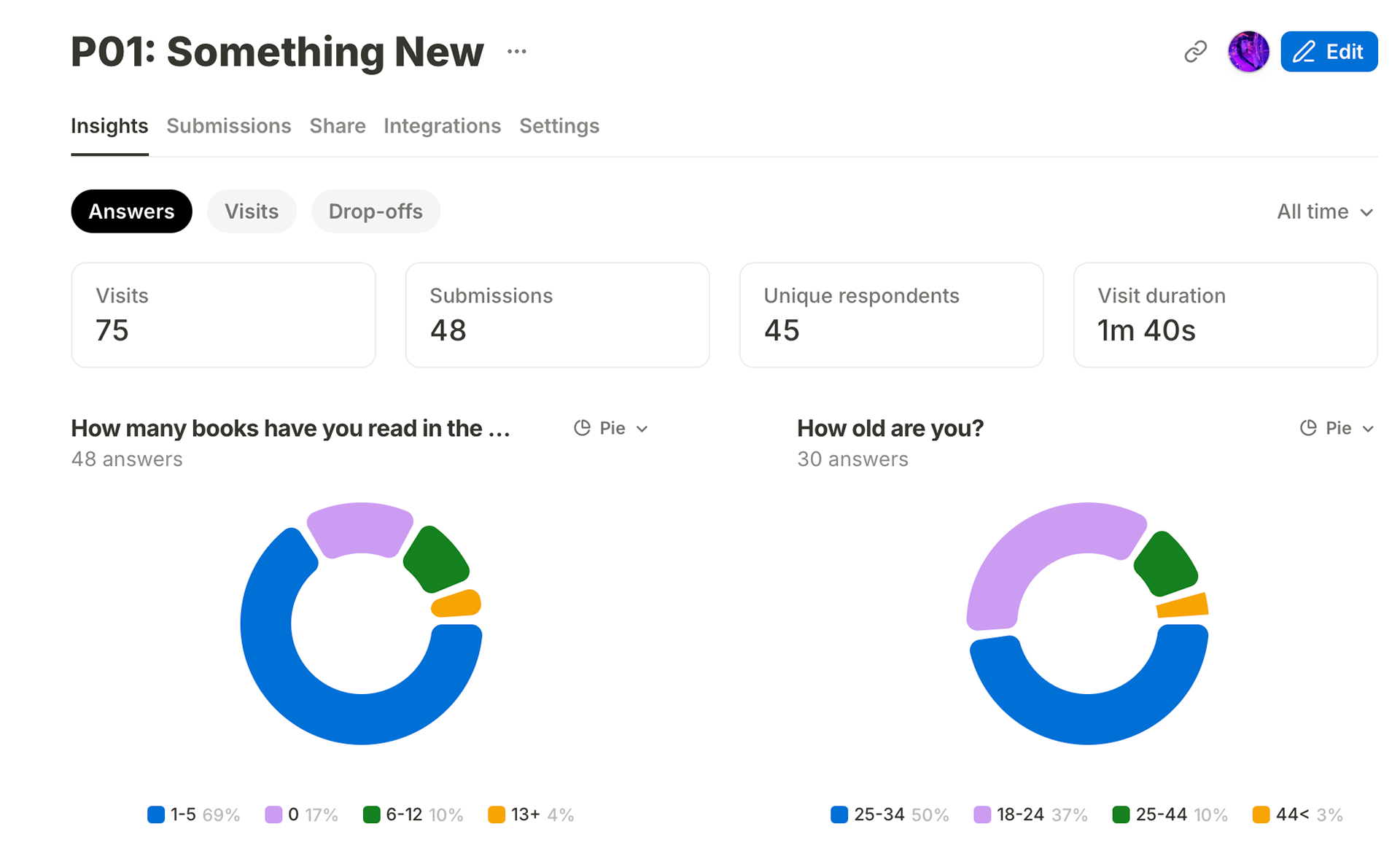
To validate these insights, I conducted an online survey using Tally to better understand user frustrations and decision-making patterns. Findings showed that many readers experience recommendation fatigue on platforms like Amazon and Goodreads, prioritize emotionally specific recommendations over author popularity, and strongly value affordable physical book ownership. Users also expressed interest in community-based book swapping and flexible review systems that balance quick ratings with deeper feedback.
These research insights directly influenced the direction of Wonder, leading to a UX strategy focused on emotional personalization, reduced cognitive overload, trust-centered marketplace design, and a cleaner, more intentional browsing experience.
Understanding the User
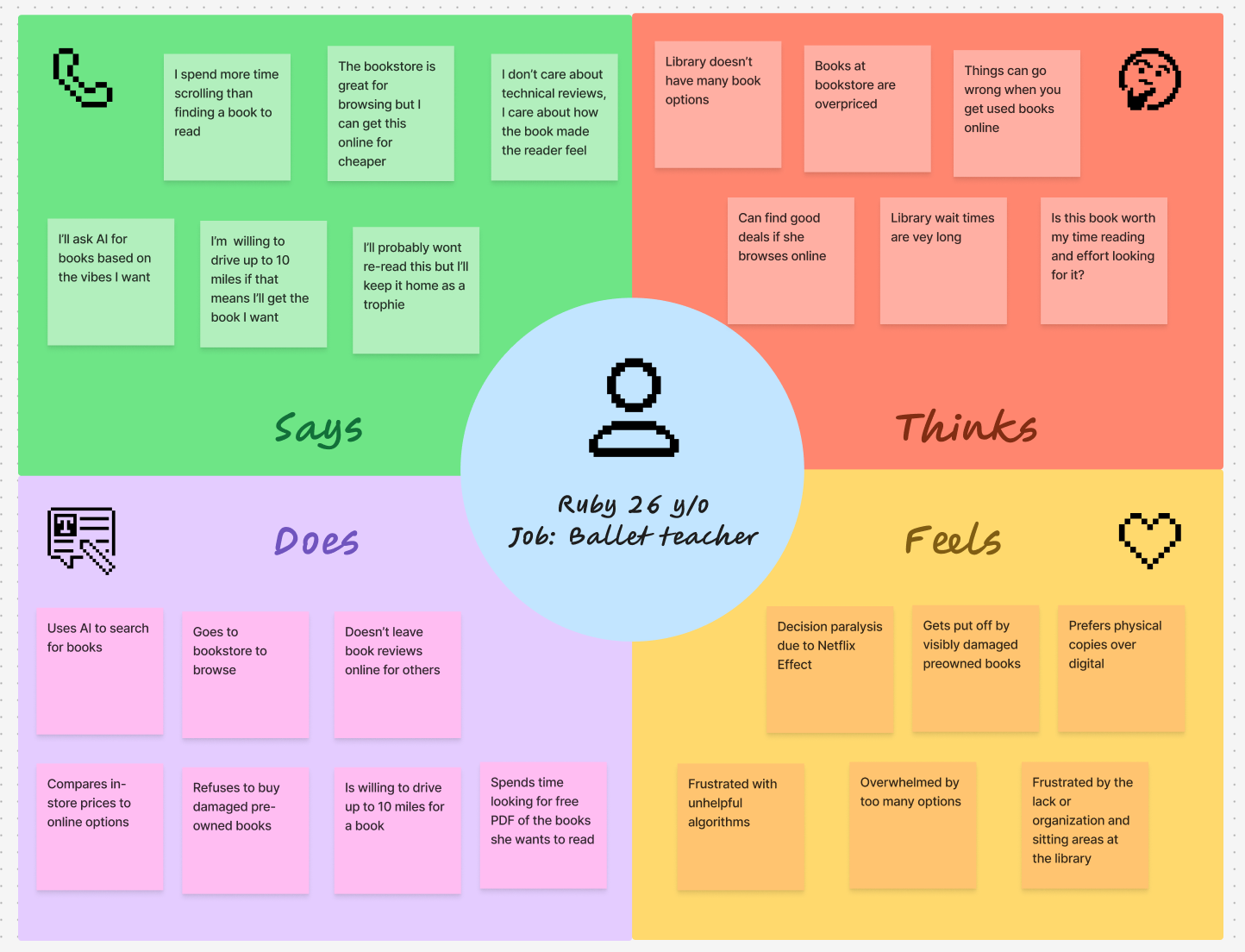
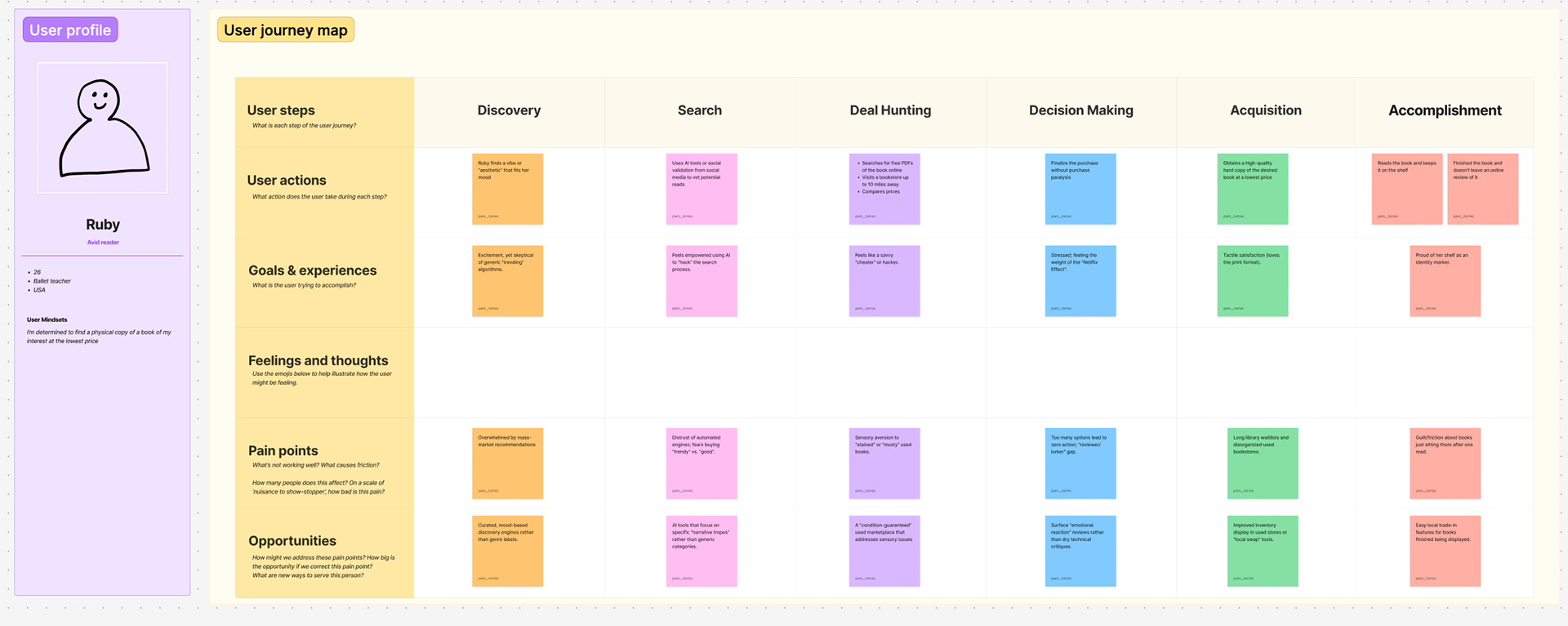
To better understand the target audience, I created a persona centered around emotionally driven readers who view books as both entertainment and forms of self-expression. The persona highlighted behaviors such as mood-based book discovery, preference for physical books, price-conscious shopping, and frustration with generic recommendation systems and overwhelming interfaces.
I also developed a user journey map to identify pain points throughout the discovery and purchasing process. Research showed that users often experience recommendation fatigue, decision paralysis, and difficulty finding affordable, high-quality physical books. Readers relied heavily on emotional themes, aesthetics, and online communities when choosing books rather than traditional genres alone.
These insights helped shape Wonder’s UX strategy by emphasizing emotionally personalized recommendations, simplified navigation, reduced cognitive overload, and trustworthy marketplace features that support physical book ownership and intentional discovery experiences.
Early Ideation
After completing the research phase, I identified several key problems within existing reading platforms, including recommendation fatigue, overwhelming interfaces, and emotionally disconnected browsing experiences. Based on these findings, the primary design goals for Wonder focused on reducing cognitive overload, creating emotionally personalized discovery experiences, simplifying navigation, supporting affordable physical book ownership, and building trust within the marketplace experience.
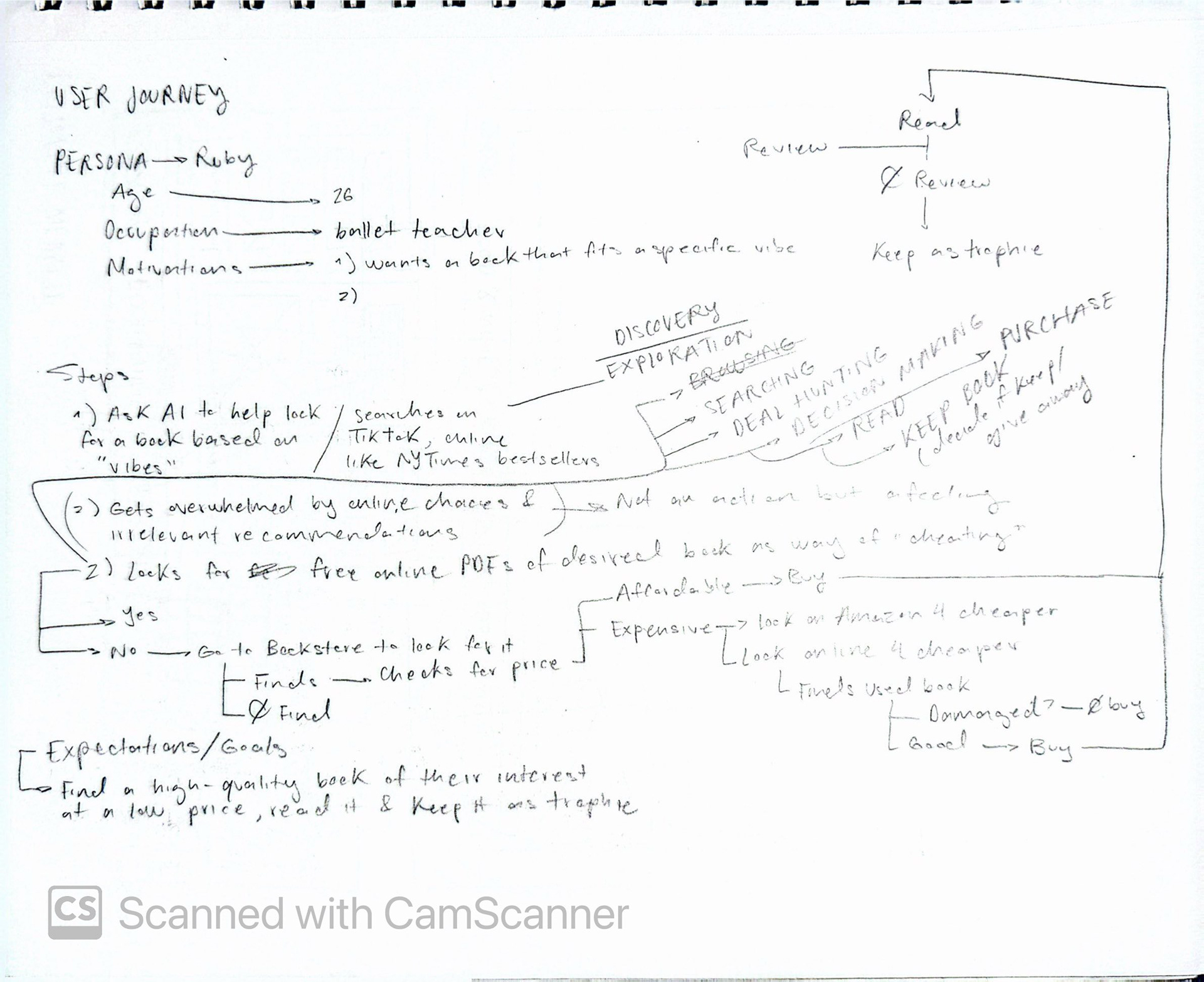
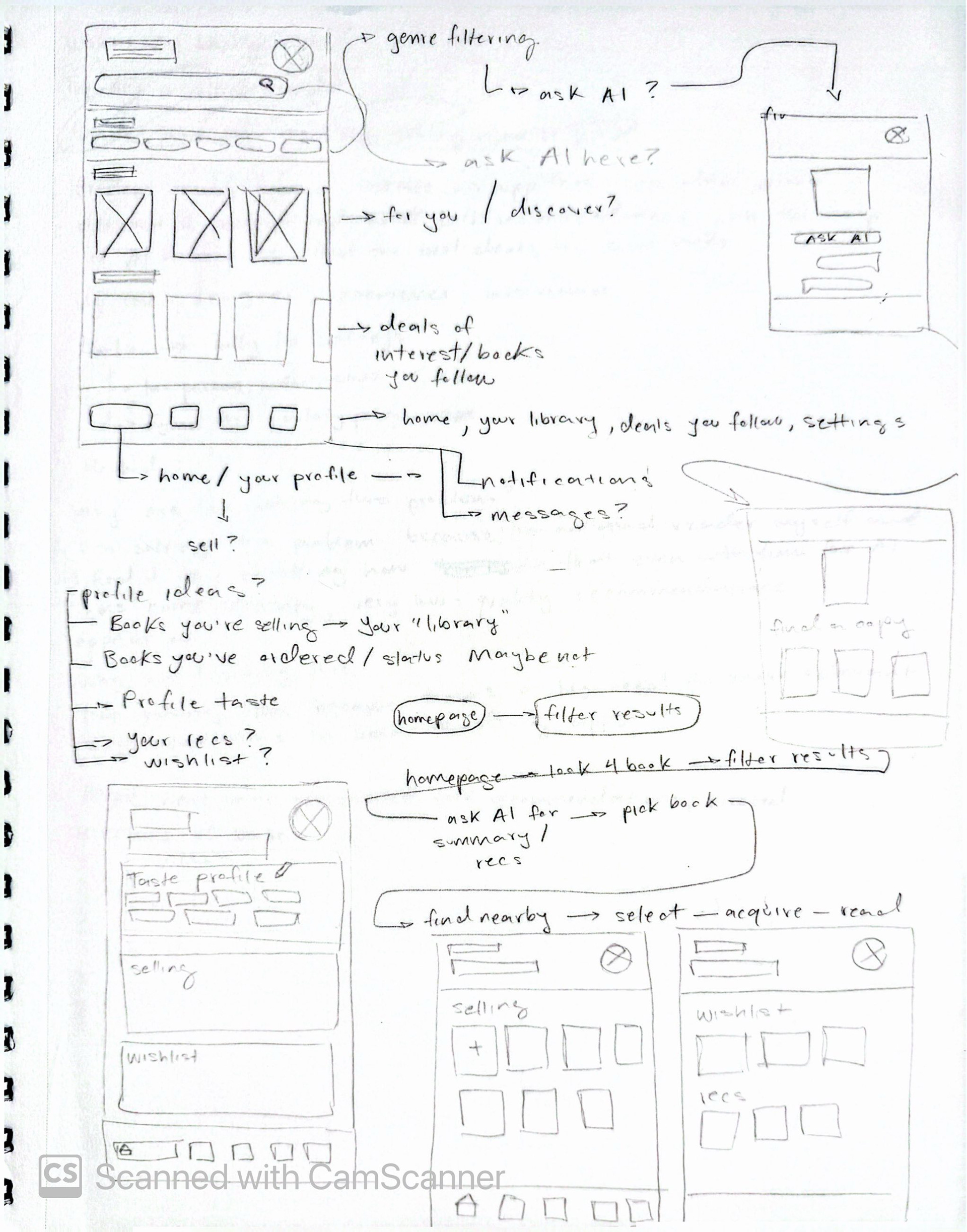
During the sketching and low-fidelity wireframing phase, I explored multiple layout directions and tested different ways to organize recommendations without overwhelming users. Early concepts with dense recommendation feeds felt cluttered, so later iterations shifted toward curated content sections, mood-based browsing categories, simplified navigation, cleaner marketplace layouts, and stronger visual hierarchy.
The marketplace experience also evolved throughout the ideation process. Later concepts introduced larger book imagery, condition transparency, seller credibility indicators, and simplified listing structures to create a more trustworthy used-book purchasing experience.
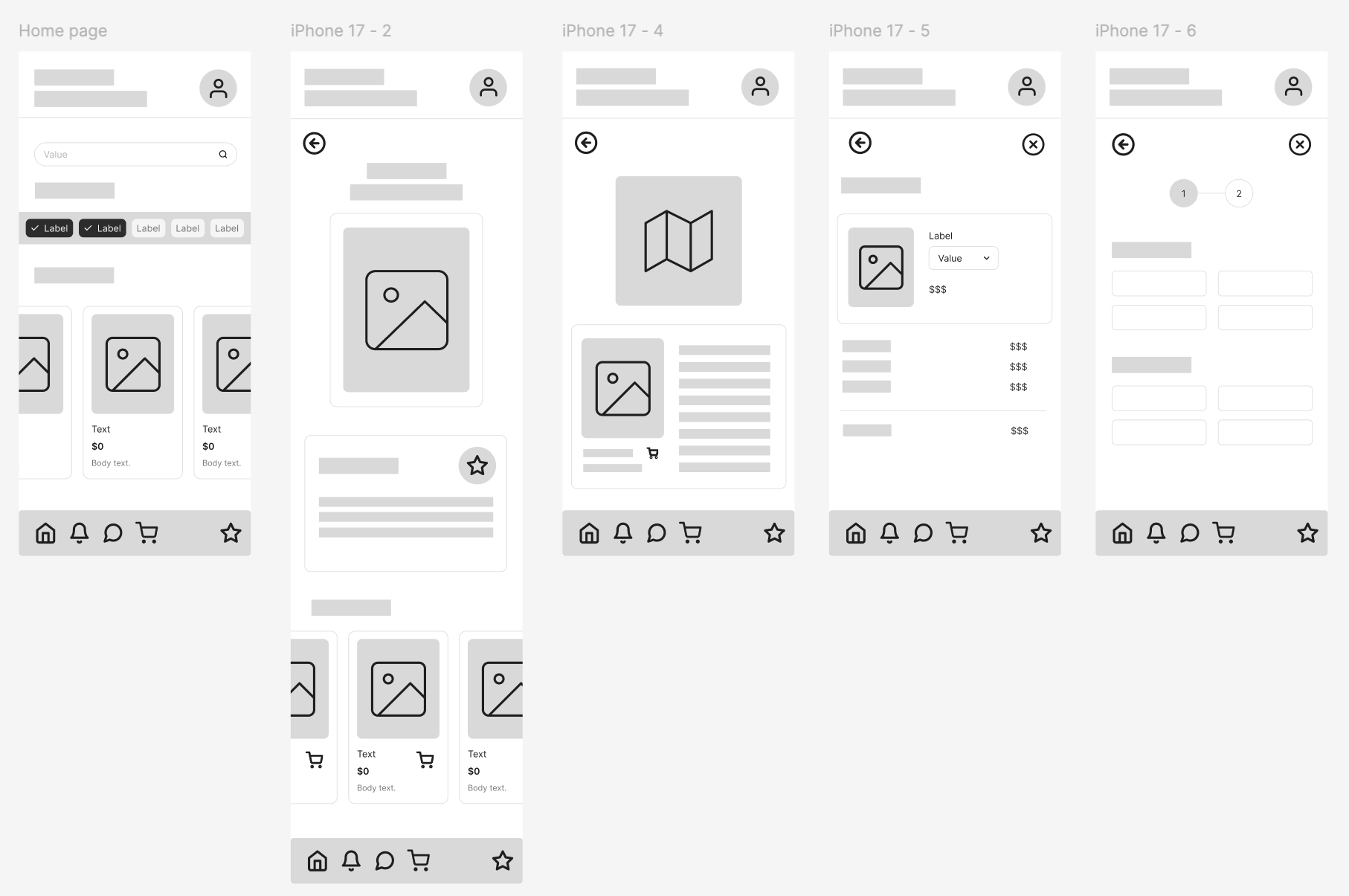
In the wireframing phase, I focused heavily on content hierarchy and cognitive load reduction. The interface was designed with increased spacing, curated recommendation sections, and simplified navigation patterns to create a calmer and more intentional browsing experience. Through multiple rounds of refinement, Wonder gradually evolved into a more emotionally curated platform centered around personalized discovery and physical book ownership.
Final Design Solution
The final design for Wonder focused on creating a more emotionally personalized and intentional reading experience. Instead of relying on traditional genre-based browsing, the app centers discovery around moods, aesthetics, tropes, and emotional preferences to help users feel more connected to the books they discover while reducing decision fatigue.
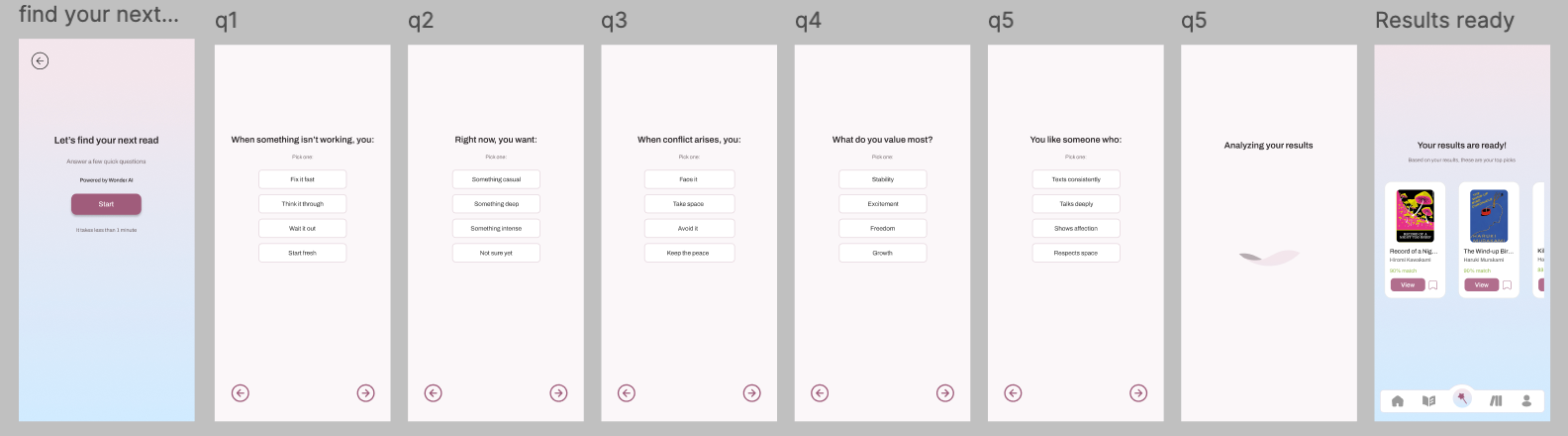
The final prototype combines AI-powered personalized recommendations with marketplace and deal-finding features in a single platform. Users begin with a discovery quiz that tailors recommendations based on emotional themes, pacing, atmosphere, and storytelling preferences. To reduce cognitive overload, the interface was designed with clean layouts, curated recommendation sections, simplified navigation, and focused visual hierarchy rather than endless recommendation feeds.
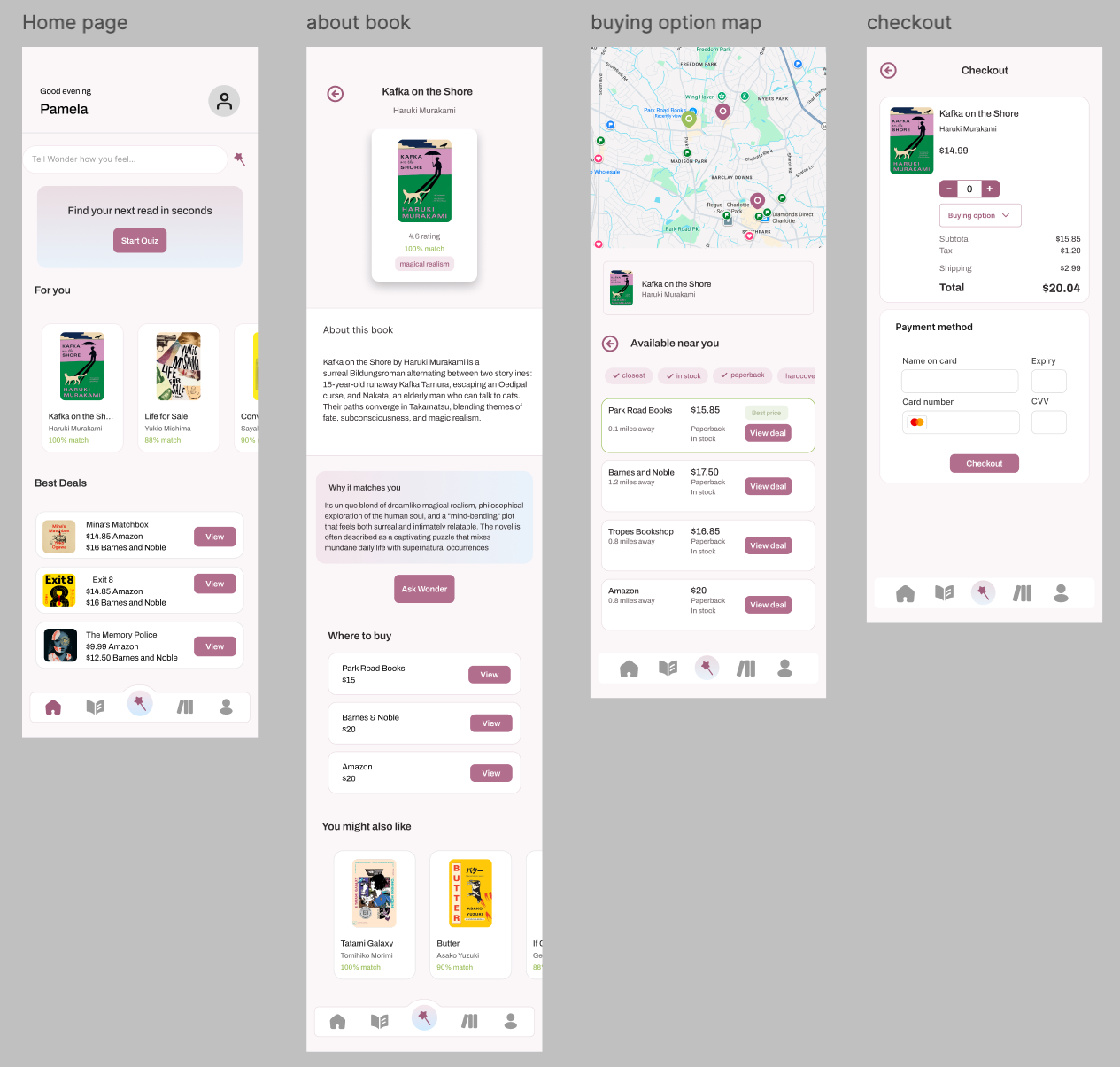
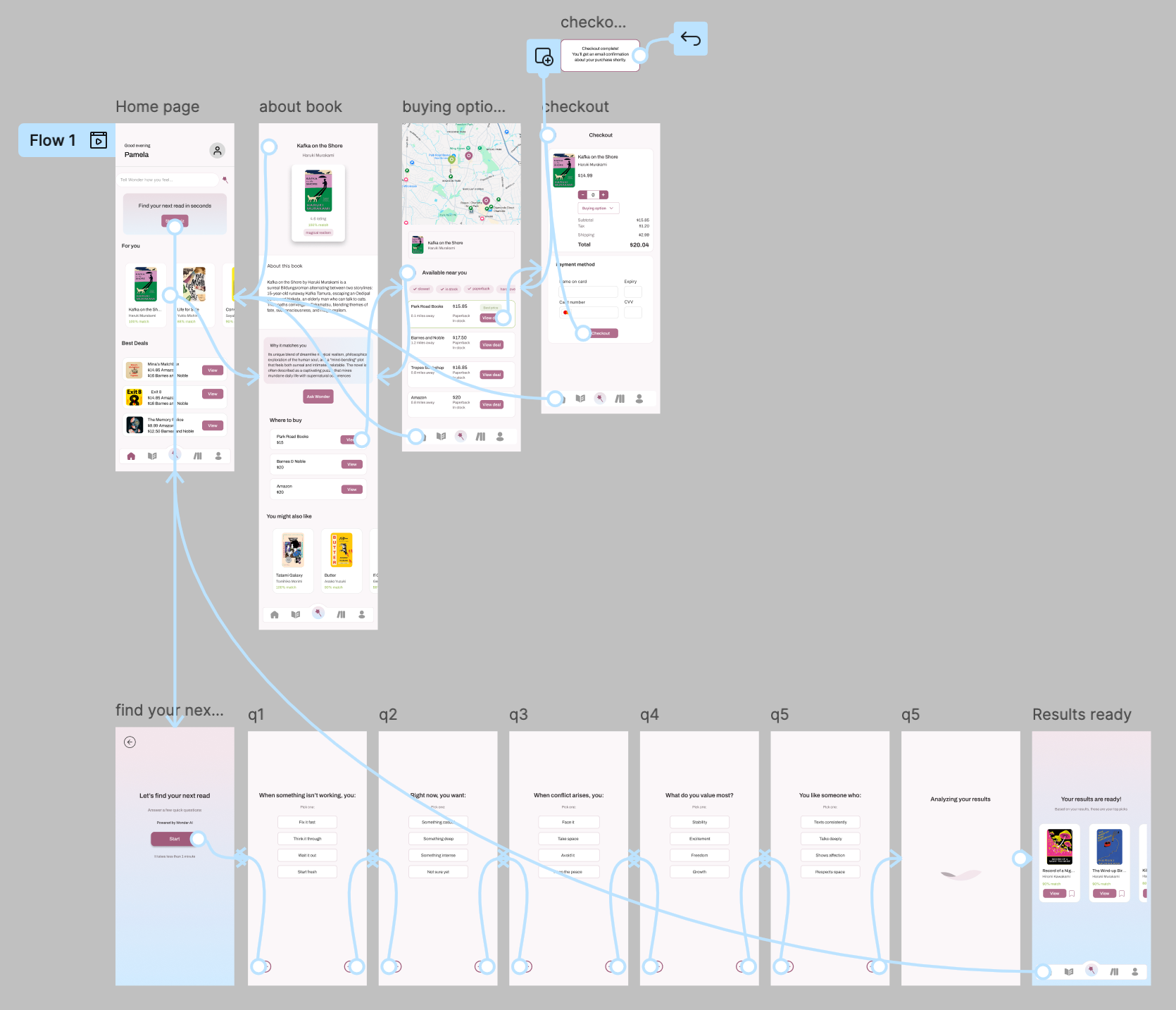
The marketplace experience was designed to support affordable physical book ownership through features such as condition transparency, detailed book imagery, and local bookstore integration. The goal was to bridge emotional book discovery with practical book acquisition in one cohesive experience.
Although Wonder is currently a conceptual project, future success could be measured through usability testing, engagement metrics, reduced browsing fatigue, increased marketplace interactions, and stronger emotional connection to recommendations. Future iterations would focus on expanding personalization features, improving marketplace trust systems, integrating social and accessibility features, and continuing to refine the balance between personalization and simplicity.
This project reinforced the importance of designing for emotional behavior, reducing cognitive overload, and grounding design decisions in user research. It also strengthened my understanding of the complete UX process, from research and journey mapping to wireframing, prototyping, and iterative problem-solving.
Next Steps
If the project were to continue, the next phase would involve conducting usability testing with real users to validate the interface, navigation structure, and recommendation experience. Testing would help identify friction points, improve feature prioritization, and better understand how users emotionally respond to the discovery process.
Additional future improvements could include:
1. Expanding the AI recommendation system
2. Integrating local bookstore inventory systems
3. Adding social and community features
4. Developing accessibility improvements
5. Refining marketplace trust and verification systems
6. Introducing personalized reading statistics and achievements
7. Testing alternative recommendation layouts to further reduce cognitive overload
8. Future iterations would also focus on refining the balance between personalization and simplicity to ensure that the app remains emotionally engaging without becoming visually overwhelming.